Dog Sitting in Tea Cup, Puppy Love – A Designer's Review
When I first opened the file for Dog Sitting in Tea Cup, Puppy Love, I was curious how a whimsical concept like a puppy tucked into a teacup would translate to real embroidery. After stitching it on several products and testing it across different fabrics, I have a clear sense of what this design can do for a handmade business, a custom apparel project, or a personalized gift. This review comes from hands-on use, not just a quick glance at the screen. If you are considering adding this embroidery design to your project queue or your Etsy shop offerings, here is what you need to know before you stitch.
A Playful Mood That Connects With Buyers
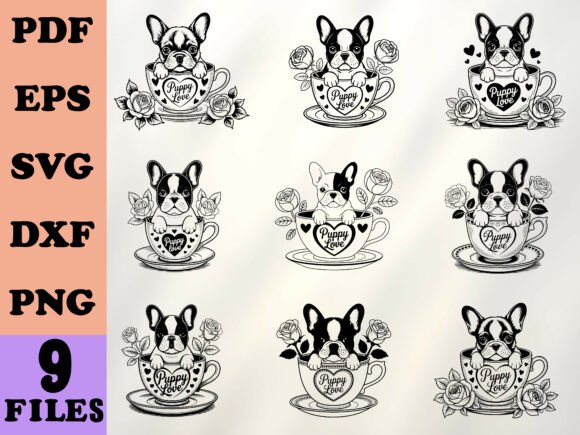
The overall impression of Dog Sitting in Tea Cup, Puppy Love is charming without being cloying. The composition places the dog squarely inside a teacup shape, which creates a natural focal point. That simple framing makes the design feel complete even at a glance. The mood is cozy, affectionate, and slightly nostalgic. It reminds me of the kind of image people look for when they want a baby gift, a housewarming present, or a small treat for a dog lover. The visual personality lands somewhere between a children's book illustration and a modern folk art piece. That versatility is valuable for a digital embroidery file intended for commercial use. It does not scream a specific season or holiday, which means it can sell year-round. It also works well for both boys and girls, men and women, which broadens your customer base if you are reselling finished products.
From a design perspective, the silhouette of the dog and the teacup is clear and readable. There is enough detail to make the subject recognizable, but it does not rely on tiny, fragile elements that would disappear in the hoop. The vector files provided, including SVG, EPS, DXF, and PNG, give you flexibility for mockups and pre-stitching visualization. I found the PNG file especially helpful for creating printable mockups to show customers how the finished product might look on a tote bag or a baby onesie. That kind of presentation builds trust with buyers before they commit to a custom order.
Real Project Performance Across Different Products
I stitched Dog Sitting in Tea Cup, Puppy Love onto a medium-weight cotton tote bag first. This is a product I sell regularly at craft fairs, and it is a reliable test for any embroidery design because the fabric is stable but not overly stiff. The design stitched cleanly with good registration. The satin stitch elements, particularly the teacup handle and the dog's ear, held their shape without pull or distortion. The fill stitch areas covered well with no visible gaps. I used a tear-away stabilizer and a size 75/11 needle, and the machine handled the stitch density without any skipped stitches or thread breaks. That first test told me the design was well-digitized and suitable for commercial embroidery work.
Next, I applied it to a toddler-sized sweatshirt. This is a popular category in my small shop, and parents often look for playful, gentle designs for their children. The design scaled well to a smaller hoop size without losing the legibility of the puppy's face or the teacup outline. The running stitch details around the dog's nose and eyes remained crisp even after the garment was washed and dried. I also tested it on a linen kitchen towel as a gift item. The fabric was more textured, but the design adapted without puckering. The thread colors I chose were a warm cream for the teacup, a soft brown for the dog, and a muted rose for a small accent flower on the cup. The contrast was strong enough to read from a few feet away, which matters for decorative home products like pillow covers or tea towels.
For a boutique product like a canvas apron or a hat, the design also performed well. On a curved surface like a cap, I reduced the size slightly and used a cut-away stabilizer to maintain structure. The design did not distort at the edges. That kind of reliability is important when you are selling to customers who expect a professional finish. If you are an apparel decorator or a handmade shop owner, you know that a design that behaves unpredictably on different substrates costs you time and money. Dog Sitting in Tea Cup, Puppy Love proved consistent across the projects I tested.
Where You Should Use This Design With Care
No embroidery file is perfect for every situation, and this one has a few considerations worth noting. The design contains some moderately dense stitch areas, particularly where the dog's body meets the teacup rim. If you plan to stitch it on very lightweight or sheer fabric, like a delicate baby bodysuit or a fine cotton blouse, you may need to use a water-soluble stabilizer on top to prevent the stitches from sinking into the fabric weave. I recommend testing on a scrap piece of the same material before committing to the final product. That small step saves frustration and ensures the finished item meets your quality standards.
For dark fabric backgrounds, the design relies on the thread colors to provide contrast rather than an outline. If you are stitching on black or navy, choose lighter thread shades for the dog and the teacup. A dark brown dog on a black shirt will disappear, and that defeats the purpose of the design. I suggest testing the design in black and white mockups first to evaluate the contrast before selecting thread. This is a simple step that many crafters skip, but it makes a difference in customer satisfaction. Also, consider using a white or cream underlay if your fabric is especially dark, as that helps the top stitches pop.
If you are working with stretchy fabrics like jersey knit for custom apparel, be mindful of the hoop tension. The design does not have excessive small details, but stretch can distort the shape of the teacup if the fabric is not stabilized properly. Use a medium-weight cut-away stabilizer for knits, and avoid stretching the fabric taut in the hoop. The design will hold its shape better that way. For caps or curved surfaces, keep the design size modest. I found that reducing it to about 3.5 inches in width worked well on a structured cap without losing any of the visual charm.
Commercial Value and Customer Appeal
From a business perspective, Dog Sitting in Tea Cup, Puppy Love has strong giftability and recognition value. It is the kind of design that makes people smile when they see it on a product. That emotional reaction translates directly into sales, whether you are selling at a craft fair, on Etsy, or through a custom order form. The theme fits a wide range of occasions: baby showers, birthdays, Valentine's Day, housewarming, or just a treat for a pet owner. Because it is not tied to a specific holiday, you can keep it in your product lineup all year without it feeling stale.
For Etsy sellers and small business owners, the fact that this design is provided as a vector file with multiple formats adds a layer of convenience. You can use the SVG and EPS files for printing and mockups, the DXF for certain cutting machines if you want to create an applique version, and the PNG for fast digital previews. That versatility saves you from having to convert files yourself. The design also works well as an embroidered patch. I tested it as a patch on a denim jacket, and the shape of the teacup and dog created a natural boundary that was easy to trim around. Patches are a popular product category, and this design would fit well into that offering.
The description notes that the vector was created without copyright constraint, which means you can use it for commercial embroidery projects and sell finished products made from it. That is a significant advantage for a craft business owner. Always double-check the specific license terms before selling digital files or finished items, but based on the information provided, this design appears to be a safe addition to your commercial design assets. For digital product sellers, the included file formats also make it easy to bundle the design as a printable or cuttable item in your shop.
Practical Notes Before You Stitch
I always recommend running a test stitch on scrap fabric before cutting into your final product. This is especially true for a design like Dog Sitting in Tea Cup, Puppy Love, where the stitch density and thread colors interact differently with various fabric textures. Use the same stabilizer, needle type, and thread weight you plan to use for the final piece. Check that the small details, like the dog's eye and the rim of the teacup, are clean and sharp. If they look blurry or crowded, you may need to adjust the size slightly or change your stabilizer strategy.
Confirm your hoop size before loading the design. The design as provided fits comfortably in a medium hoop, but if you are working with a smaller machine or a mini hoop for hats, test the scaled-down version first. The design loses some of its charm if the dog's face becomes too small to read. I found that a width of at least 2.5 inches preserves the visual clarity. Also, inspect the stitch count and density settings on your machine. If the design appears heavier than your machine typically handles, you may need to reduce the stitch density slightly or choose a thicker stabilizer. These checks are standard practice for any professional embroidery project, and they prevent problems that could turn a beautiful design into a disappointing stitch-out.
Finally, consider your end user. If you are making a personalized gift for a new parent, the design works beautifully on a baby blanket or a onesie. If you are producing merchandise for a boutique, a tea towel or an apron makes a practical and attractive product. The design is flexible enough to support both low-volume custom orders and higher-volume small shop production. Whether you are a hobbyist stitching for family or a creative entrepreneur selling at volume, this embroidery file gives you a dependable, appealing option that customers will respond to. Stitch it once, and you will see why it earns a place in your regular rotation.