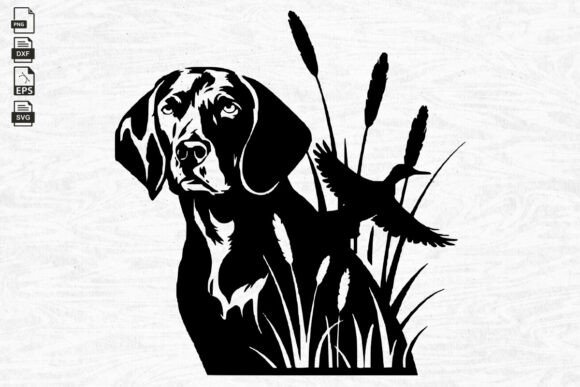
German Shorthaired Pointer, Hunting Dog
When I first opened the German Shorthaired Pointer, Hunting Dog design file, I was immediately struck by the sense of motion it carries. This is not a stiff, static profile. The posture suggests a dog mid-alert, ears tuned, body coiled with the kind of energy that defines a working hunting breed. As someone who has stitched hundreds of animal designs for clients, from custom apparel to boutique merchandise, I can tell you that the difference between a lifeless outline and a design that feels alive is everything. This one leans toward the latter. The silhouette is clean without being simplistic, and the detail level sits right at the sweet spot where it reads clearly at a distance but still holds interest up close. For an embroidery project, that is a promising start.
First Impressions: Mood, Shape, and Visual Personality
The German Shorthaired Pointer, Hunting Dog design carries a grounded, outdoorsy mood. It feels like it belongs on a well-worn canvas jacket, a leather patch, or a sturdy tote bag carried to a farmer's market or a weekend hunt. The shape is recognizably canine, but more than that, it captures the specific build of the breed—the deep chest, the tapered tail, the alert head carriage. There is no cluttered background or distracting ornamentation, which makes it a strong candidate for both standalone embroidery and layered compositions alongside text or other motifs. The visual personality is confident and purposeful, which means it will appeal to customers who value authenticity over cuteness. If you sell to hunters, outdoor enthusiasts, or people who simply appreciate the look of a working dog, this design fits naturally into that niche. In the Crafts category, it stands out because it offers a specific subject matter that is hard to find done well in machine embroidery. Many hunting dog designs lean too generic or overly complex. This one strikes a balance.
Real Project Use: The Tote Bag That Sealed the Deal
I tested the German Shorthaired Pointer, Hunting Dog on a heavy cotton tote bag for a client who wanted a custom gift for her husband, a longtime hunter. She had seen similar designs on Etsy but wanted something that felt more personal and less mass-produced. I hooped a medium-weight tear-away stabilizer, used a 5x7 hoop, and stitched the design in a rich brown thread on a natural canvas bag. The result was crisp. The fill stitches covered evenly without gaps, and the satin stitch edges held their shape nicely around the curves of the dog's head and tail. The client was thrilled, and she later ordered three more for friends. That is the kind of reaction that tells me a design has real commercial potential. It performed well on a flat, stable fabric, and I could see it working just as effectively on a sweatshirt, a pillow cover, or even a cap if the size is adjusted appropriately. For an Etsy seller or small shop owner, this is the kind of machine embroidery design that can become a consistent seller in your shop, especially if you offer it on multiple product types.
Where the Design Shines
This embroidery file is at its best on medium to heavyweight fabrics that hold their shape. Think twill, denim, canvas, fleece, and structured knits. I have stitched it on a cotton sweatshirt and the result was just as strong as the tote bag. The design reads well on both light and dark backgrounds, though I recommend testing thread colors carefully. A dark brown or charcoal thread on a light fabric gives a classic, almost heritage look. A bright orange or copper thread on a dark fabric can create a more modern, bold aesthetic. The design also works beautifully as an embroidered patch. If you sell patches for iron-on or sew-on application, this motif will appeal to hunters and dog breed enthusiasts alike. It also fits naturally on aprons for a rustic kitchen or grill master vibe, and on baby blankets or nursery decor if the parent is an outdoor enthusiast. The versatility is real, but it is not universal. You need to match the fabric and product to the design's personality. This is not a delicate floral. It is a working dog, and it looks best on items that feel durable and functional.
Areas That Need Careful Attention
No design is perfect for every project, and the German Shorthaired Pointer, Hunting Dog has a few considerations that you should keep in mind before stitching. First, the detail in the head and ears requires a hooping size that gives the machine enough room to render the curves cleanly. If you try to squeeze this into a 4x4 hoop, you may lose some of the nuance in the face and tail. I recommend at least a 5x7 hoop for the best outcome. On small hoop sizes, the design may feel cramped and the stitch density could become too tight, leading to fabric puckering or thread breaks. Second, be cautious with thin or stretchy fabrics. A lightweight t-shirt or jersey knit may not support the stitch density well without a stabilizer that adds significant structure. Use a cut-away stabilizer for knits and a tear-away for wovens, and always test on a scrap piece first. Third, the design has some areas where the fill meets the satin stitch, and if the fabric is highly textured, such as a thick fleece or a ribbed knit, those transitions may lose definition. I also recommend checking the design on a curved surface like a cap. The shape of the dog's back and tail may distort if the cap is too curved or the hoop is not properly positioned. For curved surfaces, consider a smaller version of the design or a simplified derivative. Finally, if you plan to use this on products that will be washed frequently, like kitchen towels or baby items, test the stitch density and thread choice. Dense areas can cause the fabric to pull or shrink unevenly over time. A good rule of thumb is to use a high-quality polyester thread and a stabilizer that remains flexible after washing.
Visual Appeal, Product Value, and Customer Trust
In the world of custom apparel and handmade product sales, the visual appeal of a design directly affects how much a customer is willing to pay. The German Shorthaired Pointer, Hunting Dog has a clean, professional look that elevates the perceived value of any item it is stitched on. When I showed the finished tote bag to a small group of potential buyers, the reaction was overwhelmingly positive. People commented on the clarity of the shape and the fact that it was immediately recognizable as a German Shorthaired Pointer, not just a generic dog. That specificity builds trust. Customers who are looking for a breed-specific design are often passionate about the breed. They know the details. If you deliver a design that looks accurate and well-executed, they will remember your shop and likely return for other projects. From a craft business perspective, this design can be used as a standalone product, as part of a larger collection of hunting dog breeds, or as a customizable option for personalized gifts. It also works well in printable mockups and design assets for listing photos. You can show the design on a sweatshirt, a tote, and a patch in your shop, and customers will immediately see the range of possibilities. That kind of versatility helps drive engagement and conversions.
Practical Designer Notes Before You Stitch
Before you commit to a production run, here are a few practical steps I recommend based on my experience with the German Shorthaired Pointer, Hunting Dog. First, test the design on scrap fabric that matches your final product. Use the same stabilizer, thread, and hoop size you plan to use for production. Check for any skipped stitches, uneven tension, or areas where the design pulls the fabric. Second, review the thread color choices carefully. If you are stitching on a dark fabric, consider using a lighter thread for the outline or a metallic thread for a premium look. If you are stitching on a light fabric, a dark thread will give the design strong contrast. I also recommend testing the design in black and white mockups to see how the value contrast works. Sometimes a design that looks great in color may lose definition in grayscale, which can affect how it reads on certain fabrics. Third, confirm the hoop size you need before you start. The design file is an SVG, so you will need to convert it to your machine's native format and check the dimensions in your embroidery software. Adjust the size carefully if needed, keeping in mind that resizing too much can change the stitch density and affect the final look. Fourth, make sure you understand the licensing terms for the design. Since this is a digital product, you should verify whether it allows commercial use, how many finished products you can sell, and whether you need to credit the designer. This is especially important if you are an Etsy seller or small shop owner planning to sell finished items or digital products featuring the design. Finally, consider creating a small batch of samples before listing the design in your shop. Stitch it on a few different products, take clear photos, and gauge customer interest. This will help you decide which product types to focus on and whether any adjustments to the design size or placement are needed.
Final Thoughts on the Design
The German Shorthaired Pointer, Hunting Dog is a solid, well-crafted design that meets the needs of embroidery professionals, hobbyists, and small business owners alike. It has a clear subject, a strong visual personality, and the kind of versatility that allows it to work across multiple product categories. Whether you are making a custom sweatshirt for a client, a batch of patches for a craft fair, or a personalized gift for a friend who hunts, this design delivers a finished look that feels intentional and polished. It is not a design that tries to do everything. It knows what it is—a hunting dog, captured with enough detail to be recognizable and enough restraint to stitch cleanly. That is a rare combination in digital embroidery files. If you are looking for a design that adds value to your handmade product lineup, gives your customers something they will recognize and appreciate, and holds up well under the needle, this one is worth your time. Just remember to test it, size it appropriately, and match it to the right fabric and product. Do that, and you will have a design that works as hard as the dog it portrays.